Siesta Key Beach
The quartz-sand beach everyone searches for, with parking strategy, map links, Sunday drum circle details, and where to go after.
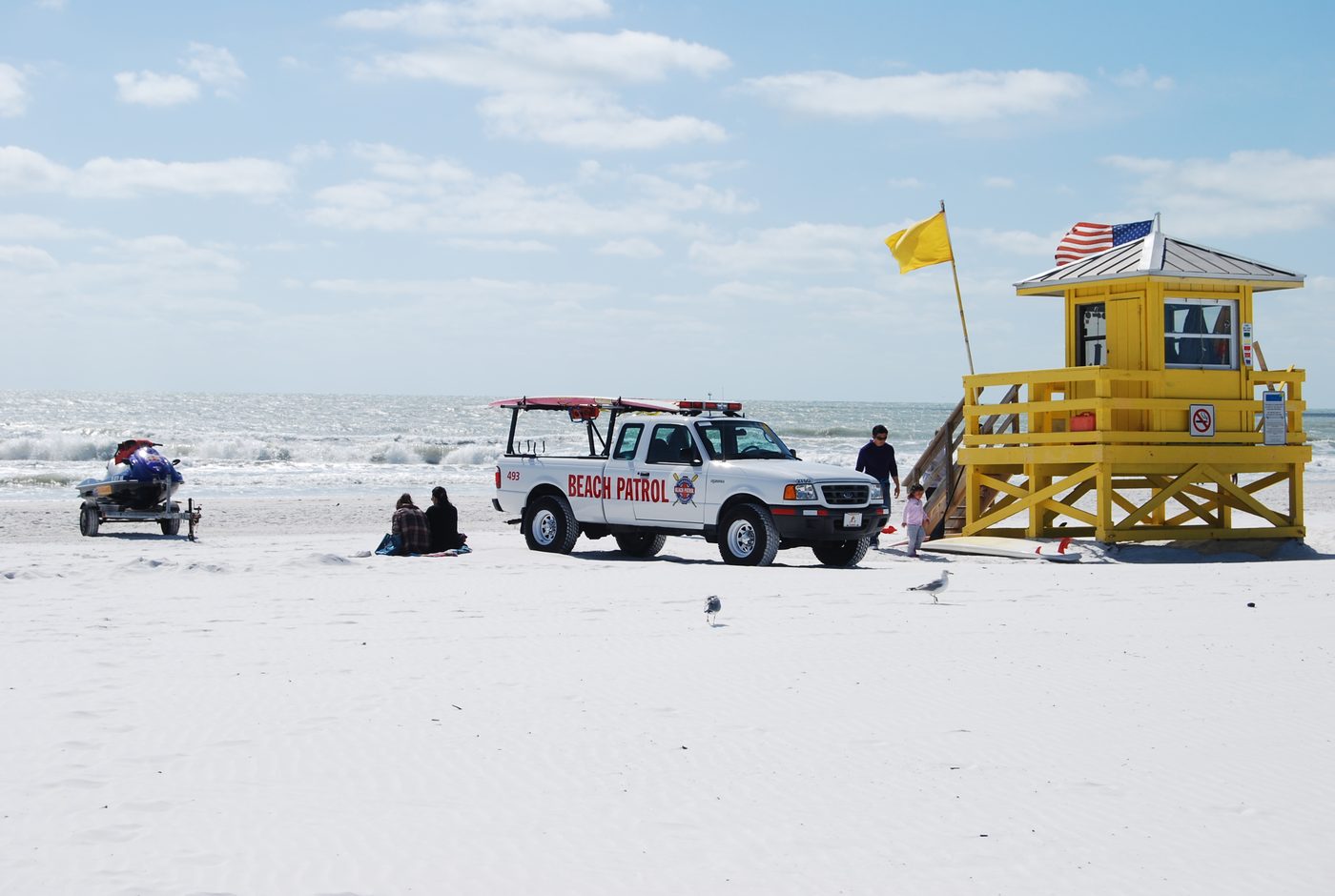 Siesta Key Beach. Photo: 4net, CC BY 3.0, via Wikimedia Commons
 What to know this summer
Late July and August keep Siesta's social lane simple. The Sunday Drum Circle gathers about an hour before sunset every week near the main beach pavilion. Bring water, arrive early, and let the beach handle the introductions.
Sea turtle nesting and hatching season runs through October. FWC asks beachgoers to give marked nests space, fill holes before leaving, clear beach gear at night, and keep phone lights low after sunset. Before swimming, check today's Sarasota beach conditions and the FWC red tide status. Make that check the day you go because a swim day can change quickly after storms, wind shifts, and rain.
Siesta Key Beach. Photo: 4net, CC BY 3.0, via Wikimedia Commons Why people travel for this beach
Siesta Key Beach is the eight-mile barrier island beach south of downtown Sarasota that wins, almost every year, the headline national ranking. The pull is the sand: it's 99% pure quartz crystal, ground over millions of years from the Appalachian mountains, blindingly white and famously cool to the touch even at the peak of summer. You can walk barefoot at 2 p.m. in July. Try that on Daytona.
Locals know there's even more to love than the headlines suggest: the sand is unusually fine, almost powder-soft, so it packs hard enough at the water line to bike or run on. The Gulf shelf drops away gently for a long, long way, so even a hundred yards out the water is at waist height. And the western exposure delivers the full slow sunset over open water every clear evening of the year.
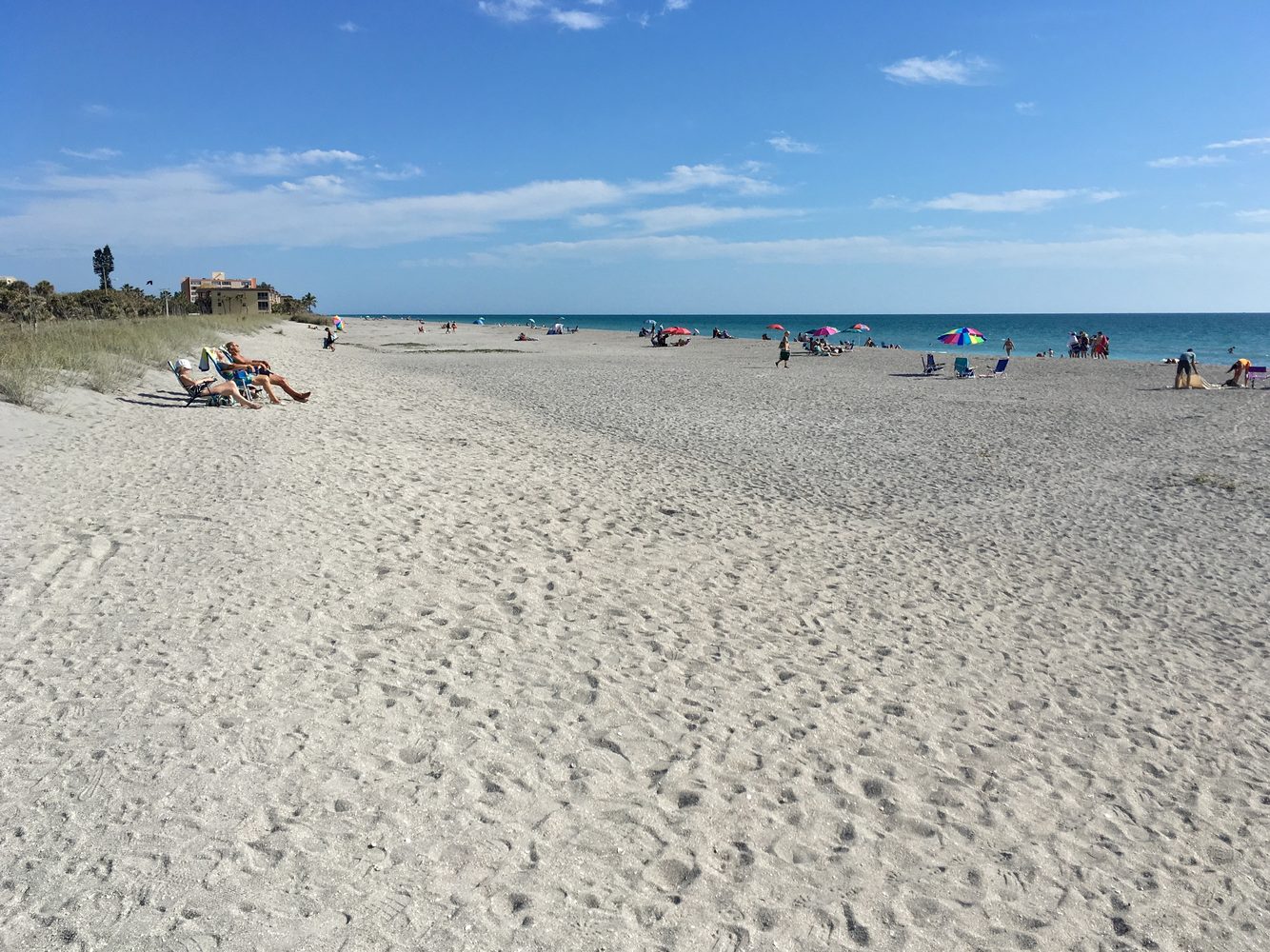 Turtle Beach on Siesta Key. Photo: Fred Hsu, CC BY-SA 3.0, via Wikimedia Commons
 The three Siesta Key beaches
When people say "Siesta Key Beach" they usually mean the main public beach at 948 Beach Road - sometimes also called Siesta Public Beach or just "the main beach." This is the famous one, the lifeguarded one, the one with the parking lots and amenities. If you have one beach day in Sarasota, this is it.
Crescent Beach, at the south end of the key, is the quieter local choice. Same quartz sand, fewer crowds, lower amenities. No lifeguard, smaller parking lot at Point of Rocks Road - which is also one of the best snorkeling spots on the Gulf Coast, with a small reef of fossilized coral about 50 yards offshore.
Turtle Beach, at the very southern tip, has different sand entirely - shellier, coarser, browner. It's the locals' choice for camping (there's a small county campground), fishing, kayaking the south end backwater, and walking the dog. The Gulf shelf drops off faster here so the swimming is deeper but the breeze is better.
Parking - the local strategy
The main beach has two lots, roughly 970 spaces, free. They fill by 10 a.m. on any sunny weekend from November through April, and as early as 9 a.m. in the peak February-March season. If you're not parked by then, you'll circle the lots, then circle them again, and probably leave.
The play: arrive by 9 a.m. (early enough to walk, late enough that lifeguards are coming on duty) or after 2 p.m. (when the morning crowd starts thinning). Mid-week is dramatically easier than weekends. If you absolutely must do a Saturday in March, take the free Siesta Key Breeze trolley from a downtown lot or a Village stop instead of fighting for a space - it runs every 20 minutes.
Map links for the beach day
Use Main Siesta Beach, 948 Beach Road for the full amenity setup: lifeguards, pavilion, restrooms, playground, volleyball, and the big public lots. Use Crescent Beach and Point of Rocks when you want the quieter south-end version. Use Turtle Beach for camping, a boat ramp, fishing, and a less polished local feel.
If the lot is already cooked, use Siesta Key Village as the reset point, then trolley or walk depending on heat and patience. Siesta is easier in summer than season, but it is still a famous beach. Your day gets much better when the map decision is made before everyone is hungry.
Siesta Beach at sunset. Photo: Vibing Sarasota When to go
The classic Sarasota answer is October through May. The water is still warm, the air is dry and breezy, the humidity is manageable, and you can spend a full day on the sand without melting. November and December weekday mornings are the best of the year - empty beach, 75-degree air, low sun across the water.
Summer (June through September) brings warmer days, dramatic 3 p.m. thunderstorms, and a sweet bonus: parking is a breeze because the season crowd has gone home. The play in summer is a morning beach session before 11 a.m., a long lunch in the Village, then back for a late-afternoon swim after the storms blow through.
 The Sunday drum circle at sunset. Photo: Siesta Key Chamber
 The drum circle (and why it's a thing)
Every Sunday evening, starting about one hour before sunset, drummers and dancers gather on the sand just south of the main beach pavilion for the Siesta Key Drum Circle. It has been running, informally, since the late 1990s. By sunset, the circle can hold drummers, dancers, fire spinners, and a wide ring of watchers on the sand.
It is a Sarasota original. Watching the sun drop behind the gathering from the dune walkover carries its own kind of magic. Bring water, arrive early, or stroll over from the Village.
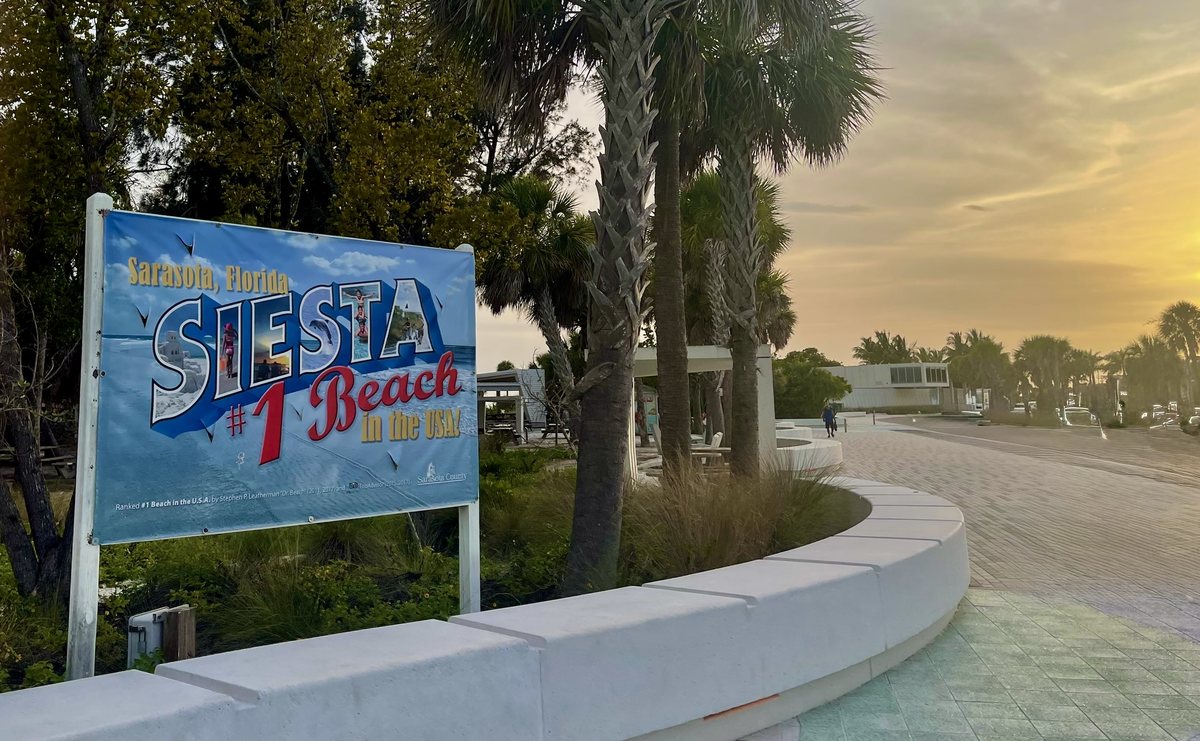 Siesta Key Beach. Photo: Vibing Sarasota
 Sunset and after
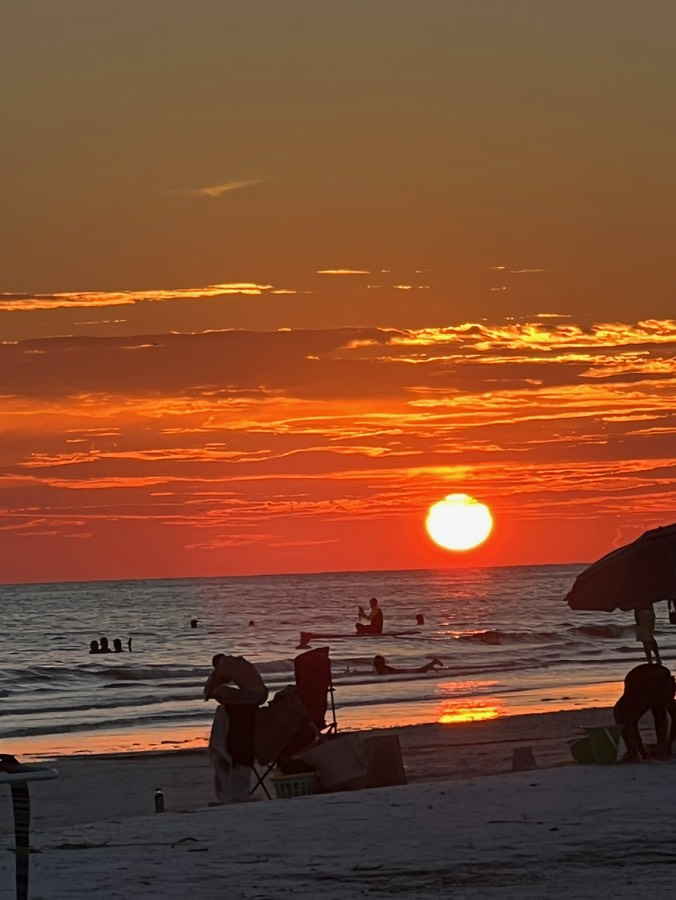
The sunset is the universal Siesta Key experience. Twenty minutes before sundown the beach reorients - everyone walks down to the water line, finds a spot, sits, watches. No fireworks, no production. Just the sun going into the Gulf. It usually takes seven minutes, end to end, and the orange-and-pink afterglow lasts another twenty.
After the sun goes down, the move is Siesta Key Village - the small commercial strip about a half-mile inland, walking distance from the main beach lots. Casual restaurants, ice cream, bars, live music in the evenings. Daiquiri Deck is the tourist anchor; the Cottage and the SKOB (Siesta Key Oyster Bar) are the more local moves. Park at the beach, walk to dinner, walk back.
What to bring
Water. The pavilion snack bar is fine but expensive, and you'll go through more than you think. Reef-safe sunscreen - Florida law since 2020 in many counties, and the polite local norm everywhere else. A wide-brim hat. The umbrella you bought at home, because the umbrella rentals are $35 and there are only so many. A book - the wind on the beach is the rest of your life on pause.
What not to bring: alcohol, glass containers, and a drone. All three are explicitly banned and lifeguards enforce. Smoking is also banned on the sand at the main beach, as of 2022.
Where to eat after
The Village (a half-mile walk from the main beach lots, or a short trolley ride): the Cottage for a casual sit-down with live music most nights. SKOB - the Oyster Bar - for raw oysters and locals at the bar. Daiquiri Deck if you want the tourist version of all of it. Captain Curt's Crab & Oyster Bar for a no-frills shrimp basket and a beer.
If you have a car and want to head off-island for dinner, St. Armands Circle is fifteen minutes north and the fine-dining options downtown are another five minutes past that. For something quieter, the south end of the key near Turtle Beach has a few low-key spots that locals guard.
Frequently asked
What is happening at Siesta Key Beach in late July and August?
The Sunday Drum Circle gathers about an hour before sunset every week, sea turtle nesting and hatching season is active, and same-day water conditions still set the swim plan. Arrive early for the circle, check beach conditions before swimming, and give marked turtle nests plenty of space.
Is Siesta Key Beach free?
Yes. Admission is free, and parking is free in the two main lots (about 970 spaces). The lots fill by 10 a.m. on sunny weekends in season - the free Siesta Key Breeze trolley is the workaround.
Why is the sand at Siesta Key Beach so white?
The sand is 99% pure quartz crystal, ground down from the Appalachian Mountains over millions of years and carried south by the rivers. Quartz doesn't absorb heat the way silica-mixed sand does, so the beach stays cool to the touch even in July.
When is the best time to go to Siesta Key Beach?
October through May for the dry, breezy weather and warm water. November and December weekday mornings are the best of the year - quiet beach, perfect temperature. For the easiest parking, aim for weekdays instead of weekends in February and March.
How do I park at Siesta Key Beach?
Two free public lots at 948 Beach Road, about 970 total spaces. Arrive by 9 a.m. or after 2 p.m. on weekends. Alternative: take the free Siesta Key Breeze trolley from a downtown lot, which runs every 20 minutes and bypasses the parking problem entirely.
Is there a lifeguard at Siesta Key Beach?
Yes, at the main beach (948 Beach Road), 9 a.m. to 6 p.m. daily. Crescent Beach and Turtle Beach are not lifeguarded.
Can you drink alcohol on Siesta Key Beach?
No. Alcohol and glass containers are banned on the sand at the main beach. Smoking has also been banned since 2022. The bars and restaurants in Siesta Key Village, a short walk from the main lots, are where the drinking happens.
Where is the Siesta Key Drum Circle?
Sunday evenings, starting about one hour before sunset, on the sand just south of the main beach pavilion. It runs year-round and has been going informally since the late 1990s.
What's the difference between Siesta Key Beach, Crescent Beach, and Turtle Beach?
Siesta Key Beach (main beach, north end): the famous one, lifeguarded, full amenities, biggest crowds. Crescent Beach (south end): same quartz sand, quieter, no lifeguard, includes the Point of Rocks snorkeling spot. Turtle Beach (southern tip): coarser shelly sand, the locals' choice for camping, fishing, and walking the dog.

What locals are saying